


Think digital security is an unnecessary expense? Think again! With increasingly sophisticated cyberthreats, the financial loss can be devastating. In 2024 , the average global cost of a data breach increased 10% in one year, reaching $4.88 million , the largest jump since the pandemic, according to IBM . Companies of all sizes face financial risks due to attacks such as ransomware, phishing, and DDoS.

The question that arises is: can investing in digital security really save money? The answer is yes. Effective protection not only prevents direct financial losses but also ensures business continuity and protects brand reputation .
Investing in digital security is a long-term strategy that can generate financial returns. In fact, analyzing the costs of a cyberattack shows that prevention costs are lower than the losses caused by incidents. This article explores how digital security is not just a matter of protection, but an investment that reduces costs and strengthens companies' competitiveness.
Costs of cyber attacks
Cyberattacks have significant direct and indirect financial impacts. Ransomware , for example, can generate ransom payment costs and cause operational disruptions . Downtime of critical systems can result in significant revenue losses. Furthermore, costs for technical support and specialized consulting services increase losses .
Investing in digital security significantly reduces the costs associated with data breaches. A Ponemon Institute revealed that by preventing attacks before they cause damage, organizations can save resources, costs, damage, time, and reputation.
Furthermore, the “2016 Cost of Cyber Crime Study & the Risk of Business Innovation” highlights that a high security profile, determined by the implementation of specific practices and technologies, supports business innovation and reduces the financial and reputational consequences of a cyberattack.
This data emphasizes the importance of adopting preventative solutions, such as network monitoring and backup systems, to protect the company's financial and reputational integrity.
Types of cyber attacks and their direct financial impacts
Cyberattacks can be classified into several types, each with a specific financial impact. Ransomware, for example, demands ransom payments and recovery of compromised systems.
According to ISH's annual report , the average cost of a ransomware attack in Brazil exceeded R$7 million in 2024. Furthermore, these attacks result in downtime that directly affects productivity and revenue generation.

Phishing is another significant threat, targeting the theft of sensitive information, such as banking credentials and personal data. This type of attack ranked second, accounting for 15% of attack vectors, but ultimately cost the most, $4.88 million , according to an IBM report. This type of attack can result in financial losses from legal proceedings, as well as damage to customer trust.

DDoS attacks are also common, especially among e-commerce companies, which face significant revenue losses when their websites go down. A recent report from Radware found that the average cost of downtime due to a DDoS attack on applications is $6,130 per minute, which equates to approximately $367,800 per hour for successful attacks . These attacks can be prevented with advanced security solutions, avoiding significant losses.
Statistics and data on the costs of cyber attacks
The global costs associated with cybercrime are projected to reach $10.5 trillion annually by 2025 , according to estimates from Cybersecurity Ventures . This increase reflects the growing sophistication of attacks and companies' increased reliance on digital systems.
Mid-sized businesses , which often lack the same robust defenses as large corporations, are being targeted by targeted attacks, resulting in high direct and indirect financial costs, such as disruption to operations, loss of sensitive data, and reduced consumer confidence.
The time it takes to detect and mitigate a data breach is a key factor. Currently, studies indicate that companies face an average of 44 significant cyber incidents per year , and detection and response times are slow, with three-quarters of organizations taking an average of six months or more to detect and respond to an incident. Consequently, this prolonged period significantly increases financial and operational damage . On the other hand, investing in real-time detection and response systems can significantly reduce these costs, enabling faster and more effective action.
Comparison: attack costs vs. security investments
While investments in digital security may seem high, they are significantly lower than the costs of a cyberattack. Companies that adopt preventive measures save money on operational disruptions, technical support, and reputational damage. The average global cost of cyberattacks reached US$3.32 million over the past three years . In Brazil alone, a third of responding companies faced losses of at least US$1 million during this same period.
On the other hand, investments in digital security often represent only a fraction of these costs. According to Kaspersky's IT Security Economics , large companies allocate an average of $5.7 million to cybersecurity within an overall IT budget of $41.8 million.

Furthermore, organizations that utilize continuous monitoring and rapid response tools save significantly on data recovery and downtime costs. This translates into long-term savings.
These data show that preventive strategies not only avoid financial losses but also protect competitiveness and business continuity.
The Invisible Price of Lack of Digital Security
A lack of digital security generates financial costs and affects the trust of customers and partners , damaging brand image. Data breaches and cyberattacks undermine this trust , and rebuilding it can take years, requiring significant investments in marketing and public relations.
Affected companies face a decline in customer loyalty, impacted revenue, and loss of competitiveness. The perception of vulnerability drives away new customers. Furthermore, negative repercussions in the media and on social media perpetuate the incident, requiring costly reputation-repair campaigns.
A prime example is the Change Healthcare data breach in February 2024. The largest healthcare payment system in the US was down for nearly a month due to a ransomware attack, affecting 100 million people . The incident highlighted the devastating impact of cyberattacks on consumer confidence.
The importance of digital security is reinforced by research showing that 90% of consumers in Brazil and 83% globally value the protection of their personal data when choosing a company. Furthermore, 63% of companies plan to increase their cybersecurity investments following breaches, with 55% focusing on Incident Response (IR) .
Investing in digital security not only protects data but also prevents loss of trust and the need to reposition your brand. Given a scenario where the global costs of cyber damage are expected to reach trillions , cybersecurity is essential to ensure business continuity and financial stability.
Financial benefits of digital security
Investing in digital security brings both short- and long-term financial benefits, helping companies reduce risks and improve operational efficiency. Furthermore, companies that prioritize digital security not only avoid substantial financial losses but also strengthen their competitive position in the market.
Appropriate protective measures contribute to optimizing internal processes, reducing damage recovery costs, and strengthening brand reputation.
Reduction of financial losses
Digital security significantly reduces financial losses, protecting companies from the high costs associated with cyberattacks. With a secure infrastructure, you can avoid:
- Ransom payments: Ransomware attacks continue to rise, demanding high sums for data release.
- Recovery expenses: include hiring specialists and using expensive tools.
- Operational losses: shutdowns can last for days, resulting in direct losses such as lost sales, decreased productivity, and reputational damage.
In addition to ensuring operational continuity, digital security allows infrastructure to operate without interruption , which is essential for smooth business operations and customer service. This way, protected companies maintain productivity and avoid the financial impact of unexpected downtime.
Implementing effective security policies helps identify and mitigate risks before they become real threats , reducing incident management costs and optimizing resource allocation. Furthermore, in the long term, investing in digital security is a smart strategy that generates financial returns by protecting the company's most valuable assets.
Global information security spending was estimated at $183.9 billion in 2024 , and is projected to grow to $211 billion in 2025, a 15.1% increase , according to Gartner. Key investment areas include:
- Internal security assessments (60%);
- Identity and access management (58%);
- Acquisition of additional cybersecurity tools (51%).
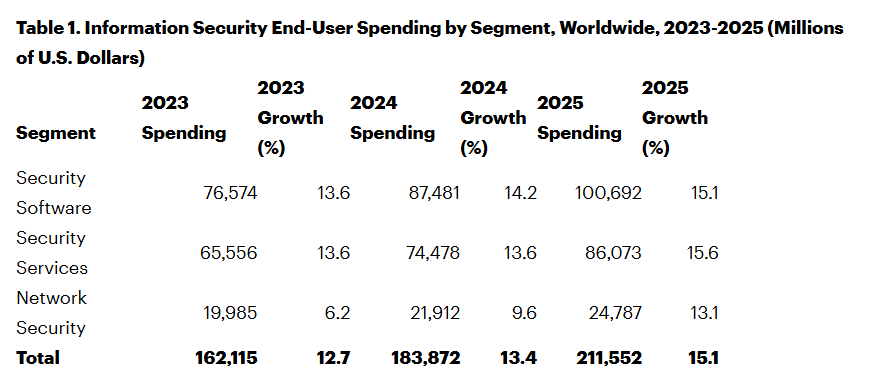
Given this scenario, investing in digital security is not just a precaution, but a strategic necessity to ensure financial stability and market competitiveness.
Avoiding Ransom Payments
Automatic backups, data encryption, and internet access control are essential to protect critical information and prevent ransom payments in ransomware attacks. Furthermore, with regular, encrypted backups, companies can quickly restore data, eliminating the need to negotiate with cybercriminals and avoiding financial losses.
In 2024 , ransom payments totaled $813.55 million , a 35% from $1.25 billion in 2023, according to Chainalysi . However, the risk remains high, as 94% of organizations targeted by ransomware reported that cybercriminals attempted to compromise their backups, and 57% of these attempts were successful, affecting data recovery, according to Sophos studies .

Additionally, internet access control solutions help block malicious and inappropriate websites, reducing the risk of exposure to ransomware and other cyber threats. Lumiun DNS , for example, allows real-time website blocking and the creation of custom filters to prevent access to harmful content.
Multi-factor authentication (MFA) , permission management , and continuous monitoring also ensure that only authorized users access sensitive data, strengthening digital security.
By combining encrypted backups , internet access control , and website blocking tools , companies protect their information, avoid financial losses, and ensure operational continuity.
Minimizing business disruptions
Real-time security solutions are essential to ensuring operational continuity. They constantly monitor IT infrastructure, detecting and responding to cyberthreats before they jeopardize operations. Consequently, this prevents attacks such as malware , ransomware , and external intrusions from compromising data integrity and system stability.
By quickly identifying vulnerabilities, these solutions prevent serious disruptions and minimize downtime , enabling immediate corrective action. This maintains efficient workflows , preserves relationships with customers and partners , and protects the company's reputation .
Operational continuity also increases employee productivity , as employees can work without interruptions or concerns about cyberattacks, promoting an efficient and safe work environment .
The importance of these solutions is highlighted by Sophos , which revealed that 59% of organizations faced ransomware attacks in the last year , with 70% of these incidents resulting in data encryption . This highlights the need for immediate detection and response systems to protect infrastructure and ensure business continuity .

Protection of brand reputation and image
Protecting a company's image and reputation is a key benefit of digital security. Data leaks or cyberattacks can cause lasting damage, impacting consumer trust and brand credibility.
Companies that invest in digital security ensure that their data and confidential information are protected, which is essential for maintaining a good image in the market.
Avoiding reputational damage
Digital security is essential to protecting a company's reputation . Indeed, data leaks and cyberattacks can compromise confidential information , undermining the trust of customers, partners, and employees. This can have immediate and lasting negative impacts , leading to a loss of credibility and driving away potential customers.
Cyberattacks , such as ransomware and DDoS , can paralyze operations , impact customer experience , and harm the quality of products and services . Companies affected by security incidents are often seen as vulnerable and unprepared , making it difficult to rebuild trust , one of the essential pillars of business success.
Advanced security measures , such as encryption , multi-factor authentication , and real-time monitoring , help prevent these incidents and protect your brand image . Furthermore, rapid responses and transparent communication in the event of incidents minimize negative impacts and demonstrate your commitment to security .
This concern is justified by data showing that 62% of consumers would stop buying from companies that don't protect their data, and 48% would abandon brand loyalty in favor of competitors . Therefore, investing in digital security not only protects reputation but also builds trust and loyalty , becoming a competitive differentiator .
Maintaining the trust of customers and partners
Maintaining the trust of customers and partners is essential for business continuity. Digital security contributes to this goal by ensuring that sensitive data and business information are protected from unauthorized access.
Companies that demonstrate a commitment to data protection have an easier time maintaining long-term relationships with their customers and attracting new business partners.
Improved operational efficiency
Digital security also has a positive impact on operational efficiency. Companies that adopt advanced security solutions can optimize internal processes, reduce operating costs, and improve productivity.
Automation tools and real-time analytics allow IT teams to focus on other critical areas , while security is maintained efficiently and seamlessly.
Optimizing processes and reducing costs
Digital security not only protects data and systems, but also optimizes internal processes and reduces operational costs. Furthermore, with efficient solutions , it's possible to automate tasks such as access verification, threat detection, and backups, freeing up IT teams for strategic activities and minimizing human error that can lead to security breaches and additional costs.
By preventing cyberattacks such as malware and ransomware , digital security prevents operational disruptions , preserving productivity , and reducing system recovery costs . This ensures operational continuity and prevents financial losses caused by security incidents.
Furthermore, regulatory compliance becomes simpler and more cost-effective with appropriate security measures , avoiding fines and penalties for non-compliance with privacy and data protection regulations. Data protection also preserves a company's reputation image reconstruction costs .
Significant savings are achieved through fraud prevention , ongoing vulnerability monitoring, and the integration of solutions that streamline verification and authentication Deep Instinct study , the economic value of attack prevention ranges from $396,675 to $1,366,365 , depending on the nature of the attack. Furthermore, 70% of security professionals believe that preventing attacks would improve their security posture and reduce the cost of cyber incidents .

Therefore, digital security is not just a protective measure , but an intelligent strategy to optimize operations, reduce costs and ensure more efficient and secure management .
Competitive advantage
In the contemporary business landscape, competitive advantage is not limited to innovative products or aggressive marketing strategies.
Cybersecurity is emerging as a fundamental pillar, capable of either strengthening or eroding a company's reputation. A data breach, no matter how small, can trigger a cascade of negative consequences, affecting everything from a company's valuation in mergers and acquisitions to consumer trust.
Increasing consumer vigilance regarding cybersecurity frameworks highlights the importance of investing in data protection as a strategic differentiator.
Standing out in the market
In a saturated market, standing out requires more than offering quality products or services. Cybersecurity has become a seal of trust, a decisive factor in consumer choices.
Studies show that more than half of customers are hesitant to do business with companies that have suffered data breaches , highlighting the direct impact on reputation and loyalty.
Investing in robust cybersecurity not only protects sensitive data but also strengthens your company's image as a safe and trustworthy environment, attracting and retaining customers.
Attracting customers and investments
Cybersecurity is not just a matter of protection, but also a valuable asset in attracting customers and investments.
In a world where information is one of the most precious assets, companies that demonstrate a commitment to data protection earn the trust of customers and investors.
The ability to protect sensitive information becomes a competitive differentiator, attracting customers who value security and investors looking for companies with a low risk of financial loss due to data breaches.
The Financial Impact of Cyber Vulnerability
The financial consequences of a cybersecurity breach can be devastating.
A drop in share prices , the loss of contracts and difficulty in attracting investment are just some of the effects that can shake a company's stability.
The case of the large retail chain that lost 10% of its share value after a data breach serves as a warning to the market: cyber vulnerability is not only an operational risk, but also a financial risk that can jeopardize a company's future.
Advanced solutions for companies that want to better protect themselves
For companies looking to better protect their data and systems, adopting advanced digital security solutions is essential.
Technologies such as next-generation firewalls, real-time threat monitoring, and access management systems are essential for protecting organizations' most valuable assets.
Digital security is no longer an option, but a strategic necessity to ensure business continuity.
Firewall and enterprise network protection
firewalls provide an additional layer of security, protecting your business network from external attacks and unauthorized access.
They enable traffic filtering and threat detection, preventing attackers from compromising critical systems.
Implementing robust firewalls is a fundamental step in protecting IT infrastructure and ensuring data integrity.
Real-time threat monitoring and analysis
monitoring and real-time threat analysis allow you to identify suspicious activity and respond quickly to security incidents .
With these technologies, companies can detect vulnerabilities before they are exploited and effectively neutralize threats.
Access management and internet browsing control
Access management is essential to protecting confidential information. Access control systems ensure that only authorized users can access sensitive data.
Additionally, internet browsing control helps prevent phishing attacks and access to malicious websites , protecting employees and the company from external threats.
Conclusion: Digital security as a strategic investment
In conclusion, investing in digital security is not just a protective measure , but a smart financial strategy. As demonstrated throughout this article, the costs of a cyberattack—from direct financial losses to reputational damage— are significantly higher than the investments required to prevent these threats. Therefore, by opting for digital security, companies not only save money but also ensure business continuity.
Furthermore, it's important to highlight that digital security strengthens the trust of customers and partners, avoiding fines and sanctions arising from non-compliance with data protection regulations. Therefore, companies that invest in security not only protect their assets but also gain a competitive advantage in the market, standing out for the reliability and robustness of their operations.
Therefore, it's clear that digital security should be viewed as a strategic investment. Rather than an additional cost, it's a way to ensure the long-term sustainability and growth of your business. In an increasingly challenging digital landscape, prevention is always more cost-effective than cure. It follows, then, that investing in digital security is an investment in your company's future.


