


DNS, short for Domain Name System, is technically a hierarchical and distributed service for computers, services, or any resource connected to the Internet that functions as a system for translating domain names (hosts) into IP addresses. In short, it is through DNS that we can simply type a name like www.lumiun.com into the browser's address bar to access the Lumiun website, without needing to enter an IP number (200.154.39.214), which is a numerical combination that is difficult to memorize.
How does DNS work?

It is possible to access any website on the Internet by its domain name (lumiun.com) or by the IP address (200.154.39.214) of the server where that website is hosted. To avoid having to enter the IP address combination in the browser's address bar every time you want to access a website, the DNS translates the domain name that makes up the URL into the IP address of the respective website's server, directing access to that server.
Imagine your contact list on your cell phone. To call someone, you simply select their name; the phone then translates that name into a phone number and makes the call. DNS works similarly.
Every server on the Internet has a unique IP address, therefore each domain points to a specific IP. For this reason, it is not possible for two different websites to have the same address (URLs).
There are 13 root DNS servers worldwide, and without them the Internet wouldn't function. Of these, ten are located in the United States, one in Asia, and two in Europe. To expand the installed base of these servers and make the service faster, there are replicas located all over the world, including in Brazil.
Who manages the DNS?

For the IP address and DNS system to function correctly, global coordination is necessary, as it is essential to ensure that IP addresses cannot be assigned in a decentralized manner and that each IP address identifies a single server or piece of equipment worldwide.
The organization responsible for managing domain names and IP addresses worldwide is ICANN (an acronym for Internet Corporation for Assigned Names and Numbers). It is this entity's responsibility to maintain all registered websites functioning on the internet.
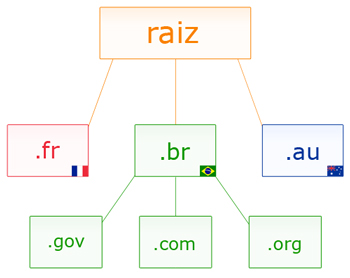
In Brazil, internet addresses are managed by NICBR – the Information and Coordination Center of the .BR domain . Services and information about domains, address lookups, and registrations can be found at Registro.BR . As of October 15, 2020, Brazil has 4,468,898 registered domains. Updated statistics are available at www.registro.br/estatisticas.html .
How do I use DNS?

Every device connected to a network and the Internet needs a DNS server to communicate on the network and access the Internet. Defining the DNS server is part of the basic network and computer settings; generally, well-known DNS services are used, such as Google's DNS (8.8.8.8) or the DNS of the Internet service providers themselves.
Lumiun Lumiun Box and Lumiun DNS are services that use the DNS system to provide security and control over internet access , filtering which domains can or cannot be accessed according to their age rating, improving productivity in companies and also increasing data security. You can see in more detail how it works and the benefits and advantages of controlling internet access in corporate environments.


1 comment
Comments closed